
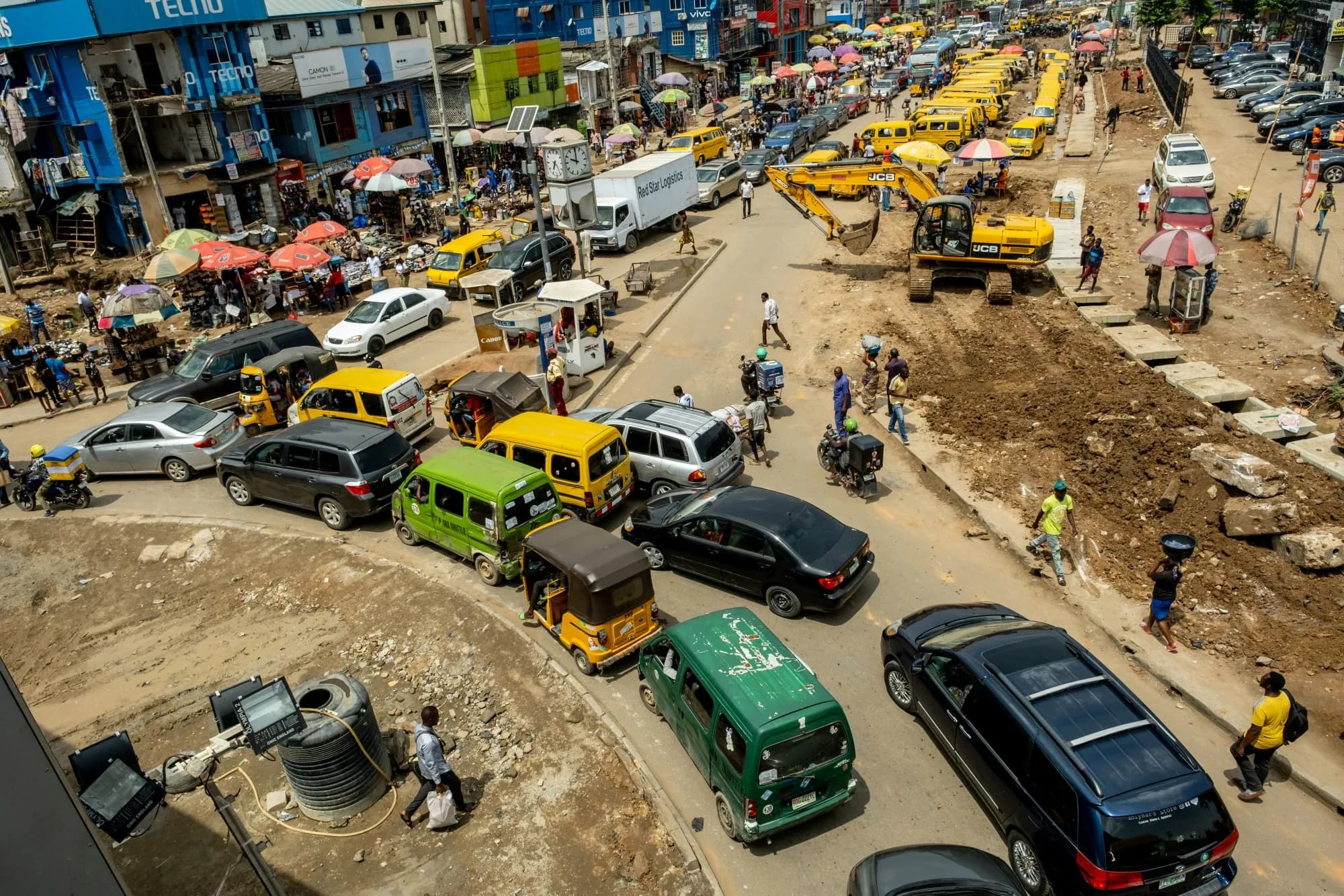
Africa's cities are growing faster than the infrastructure built to support them, and the World Bank warns that gap could undercut the continent's broader growth prospects if left unaddressed, according to a report by Bloomberg. African urban populations are expanding at roughly 3.65% a year, a pace expected to add close to 350 million new city dwellers by 2030 and push urban populations toward 1.4 billion by 2050, yet commercial, industrial and housing investment has consistently failed to keep up, leaving more than half of the infrastructure Africa's cities will eventually need still unbuilt.
The costs of that mismatch are already visible: in the average Sub-Saharan African city, about 60% of residents live in slums, nearly double the roughly 34% average across developing-country cities elsewhere, and after two decades of gradual decline that slum share has been climbing again since 2020. Inadequate sanitation alone costs African economies an estimated $5.5 billion a year, the World Bank found, with sprawling, poorly planned layouts, weak land markets and overloaded transport systems adding further unnecessary expense. The bank argues that getting urbanization right, through better land-use planning, stronger city institutions and bigger infrastructure investment, could turn Africa's urban boom into a growth engine rather than a drag on development.