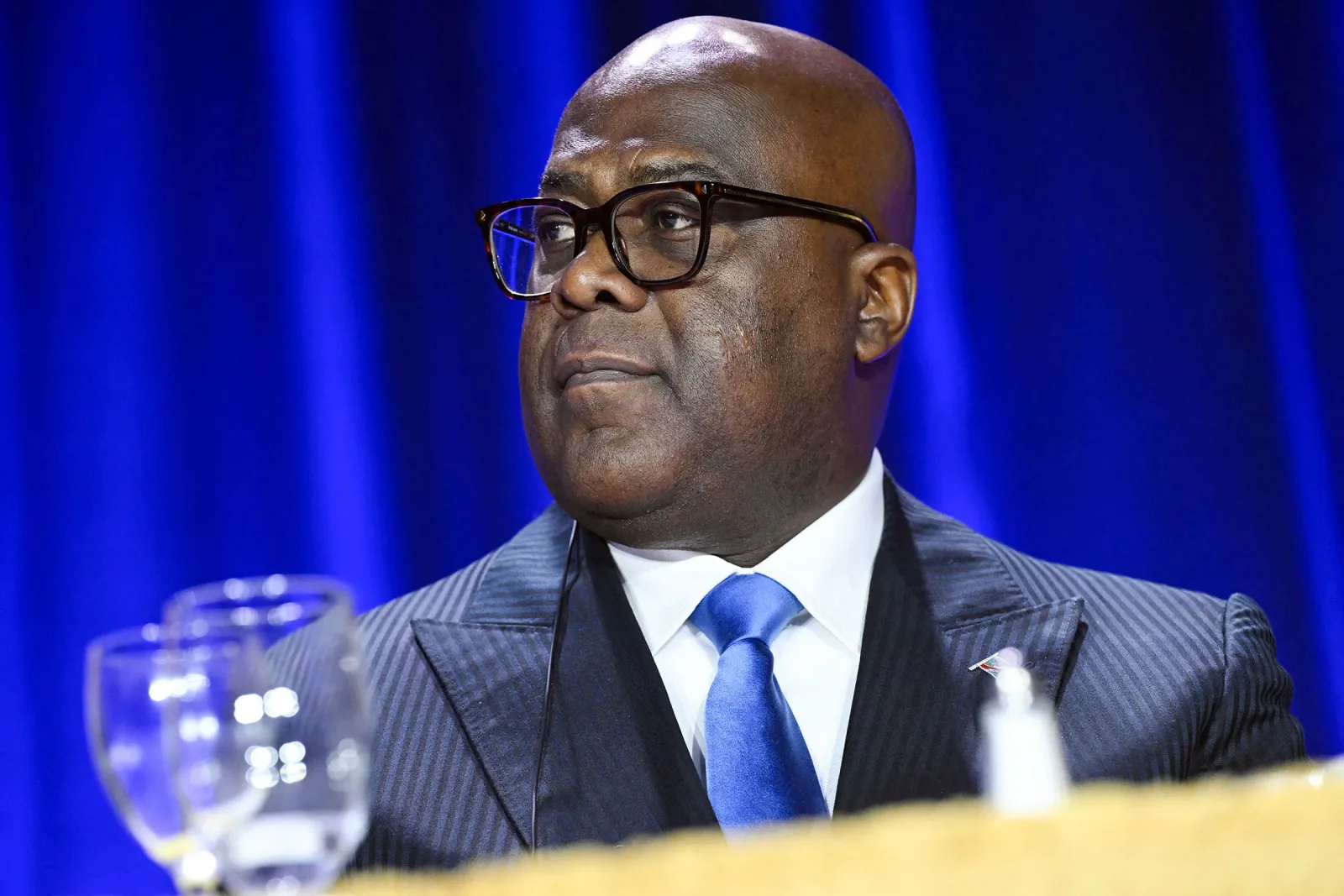
Democratic Republic of Congo President Felix Tshisekedi has enacted legislation that lays the procedural groundwork for changing the constitution, raising fears that he intends to extend his rule beyond the current two-term limit.
The law, which sets out how a referendum on constitutional amendments should be organised, was announced on national television on Tuesday night. It comes after parliament approved the measure in late October and follows months of public hints from Tshisekedi's camp that the country's basic law needs updating.
A contested step
Opposition leaders and civil society groups have condemned the move as a power grab. The DRC constitution currently limits a president to two five-year terms, and Tshisekedi was re-elected in late 2023 for his second mandate. Critics say the new referendum law is the first concrete step toward removing that cap.
Tshisekedi has denied that he is personally seeking a third term, but he has previously said he would accept one if Congolese voters approved the change through a referendum. That formulation has done little to reassure opponents, who note that referendum campaigns in the region are often tightly controlled by incumbent governments.
Political and economic risks
The DRC is one of Africa's largest countries by area and is rich in copper, cobalt and other minerals critical to the global energy transition. Political instability in Kinshasa can quickly reverberate through investment decisions, particularly in the mining sector that dominates exports and government revenue.
Foreign mining companies operating in the copperbelt and the troubled east already face security, tax and infrastructure challenges. A prolonged constitutional dispute would add regulatory and reputational risk at a time when the country is trying to attract more capital for cobalt and copper projects.
Regional echoes
The episode carries echoes of previous constitutional crises in Central Africa. Joseph Kabila, Tshisekedi's predecessor, was accused of trying to prolong his stay in power after his second term expired in 2016, triggering street protests and diplomatic pressure. Although Tshisekedi eventually took office in 2019, the memory of that period has made observers sensitive to any move that appears to bend term limits.
Neighbouring countries have also seen leaders adjust constitutional rules to remain in office, a pattern that has weakened democratic institutions and often triggered unrest. The DRC's vast size, weak central institutions and active armed groups in the east make any political confrontation there especially dangerous.
What comes next
The new law does not by itself change the presidential term limit. It does, however, create the mechanism through which such a change could be put to a popular vote. Opposition parties are expected to challenge the legislation in court and to mobilise supporters if a referendum is called.
International partners, including the United Nations, the African Union and Western donors, will be watching closely. For a country already struggling with conflict in the east and strained public finances, a bruising fight over presidential term limits is a distraction Kinshasa can ill afford.