
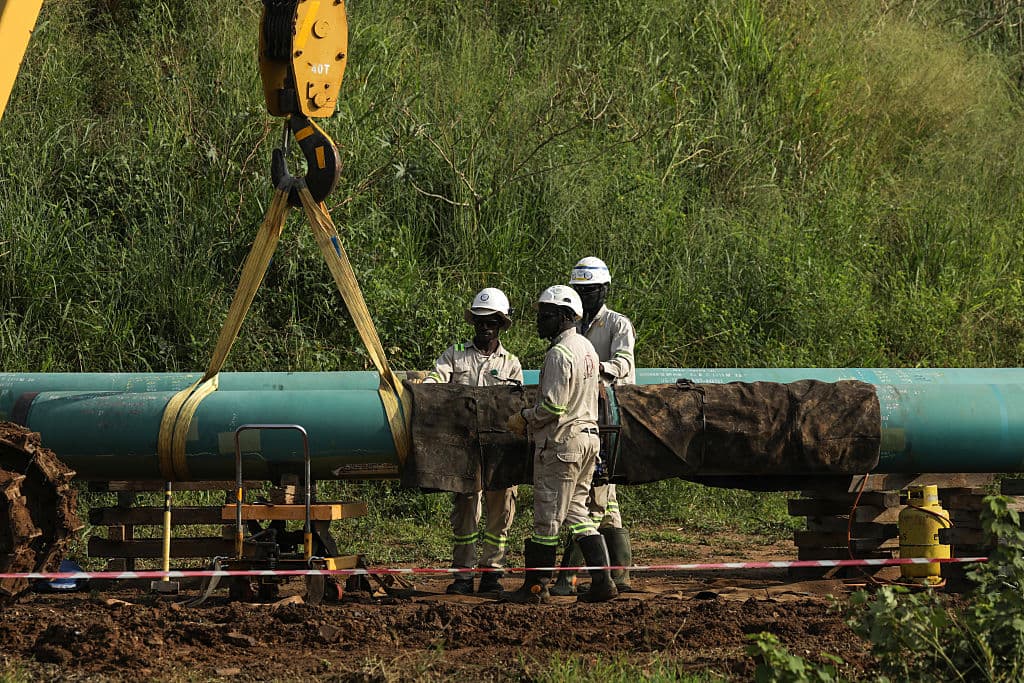
The East Africa Crude Oil Pipeline, a $4 billion project nearly a decade in the making, is now more than 98 percent complete, with first commercial oil production targeted for around June 2027, according to a report by Forbes Africa. Uganda National Oil Company Chief Corporate Affairs Officer Tony Otoa said the infrastructure will be "good to go by the end of the year," with the pipeline expected to be ready to receive crude by mid-December.
The 1,447-kilometer line runs from landlocked oilfields in western Uganda to Tanzania's Tanga port on the Indian Ocean, crossing ten Ugandan districts and eight Tanzanian regions. Because the region's crude has a waxy composition that solidifies at normal temperatures, the entire 24-inch carbon steel pipeline has to be heated above 50 degrees Celsius, maintained through six pumping stations equipped with heating points along the route. The line is also fitted with embedded fiber-optic cables and detection systems meant to flag landslides, intrusions, temperature changes and potential leaks in real time.
At peak capacity, the pipeline is designed to move 246,000 barrels of crude a day. Environmental assessments cited in the report, including data from an Earth Insight analysis, found the pipeline network intersects habitat used by antelope, monkeys, leopards and giraffes across significant portions of its route, underscoring the scale of the ecological footprint behind a project years in construction. Project backers are already eyeing a further build-out, with plans for an energy hub and additional pipeline infrastructure at Tanga once the main line is operating.