
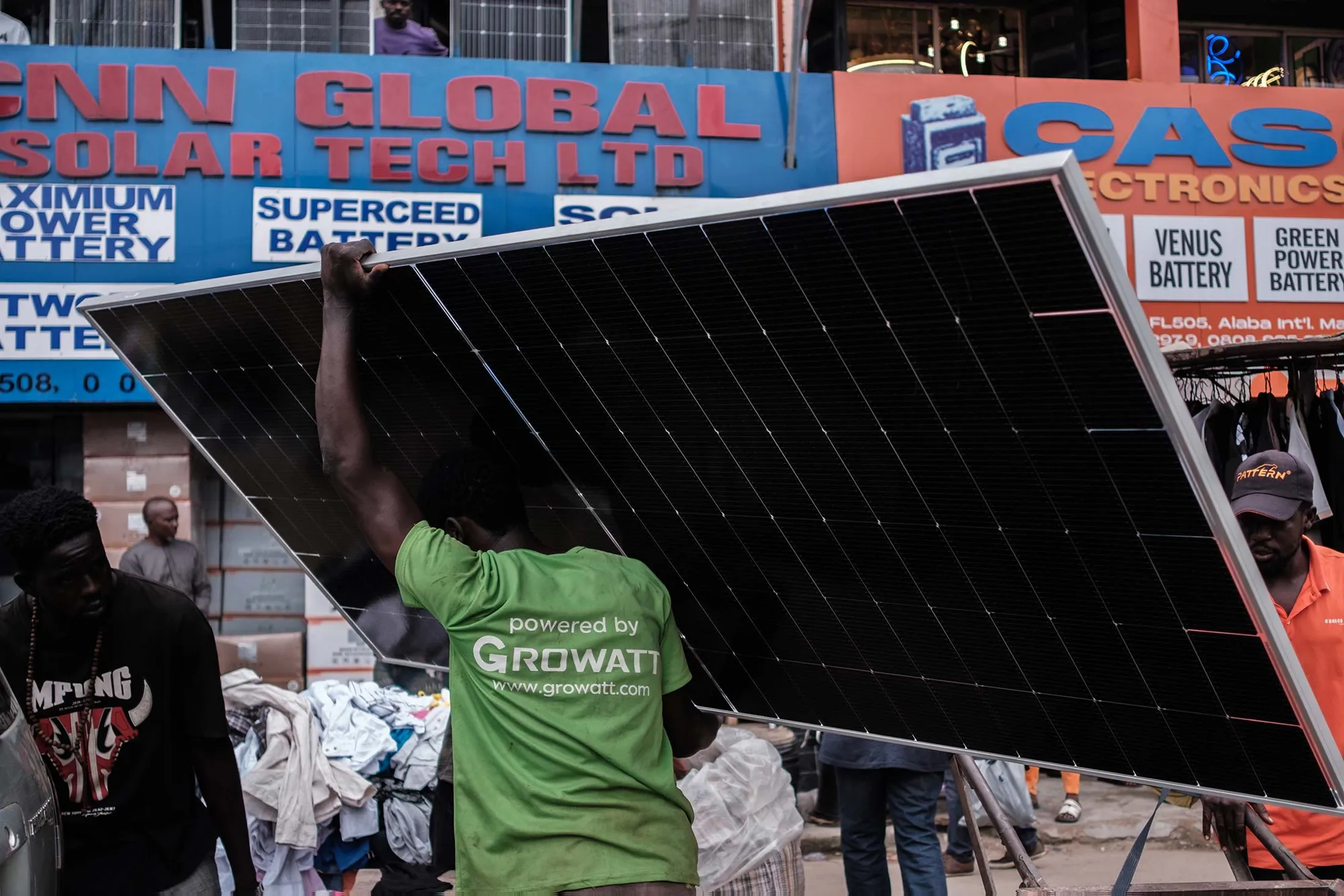
Solar panels, inverters and lithium batteries are turning up on Nigerian wedding registries alongside the usual kitchen appliances, as couples look for ways to escape the country's unreliable power grid and rising fuel costs, according to a report by Bloomberg. The shift has reshaped Lagos's Alaba International Market, where more than 200 solar shops now operate and solar products share the market's busiest corridors with televisions and refrigerators, once the default big-ticket wedding gifts.
The economics behind the trend are straightforward: a home solar setup can pay for itself in about 16 months when weighed against the roughly $200 a month many Nigerian households spend running generators, and cheaper Chinese-made panels have brought the technology within reach of more families. The result shows up in the national numbers too, with Nigeria adding as much solar generating capacity so far in 2026 as it did across 2024 and 2025 combined, as households increasingly treat solar not as a lifestyle upgrade but as basic infrastructure.